
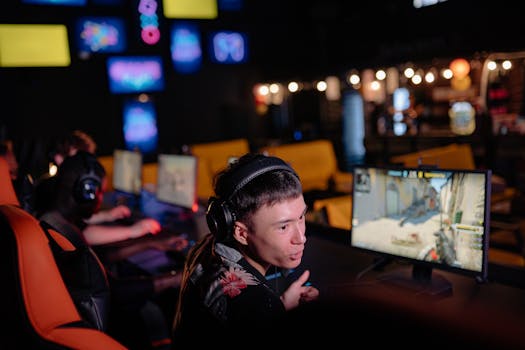
Situational Awareness Skills in Competitive Gaming: Outplaying Rivals with Precision
Spotting opportunities mid-match feels amazing. Competitive gamers know the split-second edge lies in situational awareness skills—reading cues, anticipating moves, and staying ahead.
Most matches are won before the scoreboard updates. Knowing what’s happening everywhere, and understanding why, determines whether you chase victory or react to defeat.
Unlocking these skills can transform your playstyle. Dive in to sharpen decision-making, prediction, and map control—core elements for steady improvement.
React Faster by Practicing Information Prioritization
When your goal is reacting faster, focusing on information prioritization keeps your game sharp. You’ll minimize distractions and filter critical signals instantly.
For example, a player sees a flash on the minimap, senses footsteps, and catches a teammate’s alert. Analyzing these in priority builds stronger situational awareness skills every round.
Sort Threats by Proximity and Urgency
Rank immediate threats closer to your avatar as highest priority. This directs your eyes and crosshair, letting you respond to the nearest adversary first for survival.
Compare: hearing an enemy right behind your wall is urgent, while distant sounds rank lower. Consistently ranking threats helps internalize efficient reactions under stress.
Practice this rule: “If it’s closer, react now; if it’s farther, plan an escape.” React physically—lean forward, tense mouse grip—when you notice top-priority cues appear.
Recognize Patterns in Audio and Visual Cues
Every game’s environment broadcasts crucial clues through sound and visuals. Footsteps, reload noises, or sudden silences can foretell a push or retreat.
Watch for color flashes, objective messages, or mini-map pings. Pattern recognition for these visual/audio cues deepens situational awareness skills with every session played.
Listened footsteps approaching? Say to yourself or a teammate: “Sound right, shift position now.” Building habit-forming callouts improves not just your reactions, but your whole squad’s performance.
| Input Type | Example | Priority Level | Action Step |
|---|---|---|---|
| Audio | Enemy footsteps | High | Prepare weapon, change cover |
| Visual | Map ping | Medium | Alert team, scan minimap |
| Information | Team message | Medium | Check for updated objective |
| Environment | Object moved | Low | Monitor for enemy presence |
| UI Alert | Health warning | High | Find cover, use healing |
Control Game Flow by Interpreting Context Clues
Shifting focus to interpret context clues gives you the upper hand, anticipating what comes next. This boosts your situational awareness skills, guiding real-time plans.
Reading map zones, timers, opponent patterns, or power-up rotations informs smart moves. Each clue means an advantage if you recognize and act on it ahead of others.
Decipher Movement Patterns on Team Radar
Review teammate movements and enemy reveals on the radar. Notice outlier icons or missing allies—these hint at flanks, rushes, or impending attacks.
When two allies disappear from the flank, think “safe to rotate” or “time to regroup.” Use this insight to redirect your route efficiently without hesitation.
- Switch lanes when teammates pressure one side, shifting to open spaces for crossfires.
- Cover chokepoints if the radar shows a spike in enemy presence; adjust stance to deny entry.
- Match rotations; follow the majority to prevent missteps and maintain formation integrity.
- Anticipate lone wolf tactics when teammate dots stray, calling for backup or holding cautious angles.
- Use radar silence as a cue for possible sneak attacks; refocus to guard flanks instantly.
Quick, deliberate radar scans help you avoid being blindsided, boosting your situational awareness skills every round you play.
Read Environmental Signals Aggressively
Notice new pathways, destroyed cover, open doors, or vehicles moved—these environment shifts signal recent player activity. Each signal narrows likely enemy positions.
Shattered windows? Vehicles facing wrong way? Take these details as a cue to slow your approach or check nearby corners with heightened focus.
- Scan objectives after fights for dropped gear—enemies may be close, reloading, or respawning.
- Use partially opened crates as stealth alarms; watch for traps before grabbing any loot.
- Intercept repositioned obstacles, which could mark hidden ambush points; adjust route.
- Follow dust trails from ground vehicles to pinpoint enemy teams entering hot zones.
- Monitor power-up respawn timings as signals that a team could be camping nearby.
Integrate each environmental clue by voicing short alerts: “Fresh footsteps—pause advance.” This single step sharpens situational awareness skills session by session.
Evolve Strategy Using Real-Time Observation
Outthinking rivals becomes much easier once you tie real-time observation into every match. This approach keeps your playstyle adaptive and unpredictable.
Checking flanking lanes, observing game-state changes, or noting how rivals adapt mid-match are habits found in players with strong situational awareness skills.
Spot Adjustment Moments and Shift Tactics
Identify the exact second an enemy shifts from defense to attack. For example, when they push bombsite after stalling, react by stacking defenders or retreating preemptively.
Not all movements are equal—a sudden group shift toward one site means an aggressive play is coming. Call out “rotate, full rush incoming” before footsteps even appear.
Post-match, review when you adjusted quickly versus times reaction lagged. Refine your routine by replaying those moments, repeating the analysis out loud: “Look for quick-push signs, not random rotates.”
Mimic Analyst Habits with In-Game Journaling
Track your own reads versus reality using a basic notepad during or after matches. Write things like, “Noticed long pause, expected fake, team split correctly.”
Capture timings, setups, and mistakes for future improvement. This transforms experience into advanced situational awareness skills—you’re learning from both hits and misses, not just outcomes.
Put post-game journaling reminders on your desktop. Five minutes post-match delivers more progress than five more unreflective games.
Conclusions for Sustainable Competitive Growth
Situational awareness skills don’t just improve reflexes—they unlock a mindset for reading, predicting, and controlling competitive encounters at every level.
Each section above provides a distinct technique: prioritizing cues, reading context, evolving strategy, and reviewing with purpose. Apply these directly in your matches to spot meaningful progress.
Commit to these actionable behaviors on a daily basis for a lasting upgrade to your situational awareness skills. Every session brings you closer to outplaying rivals with poise and precision.