
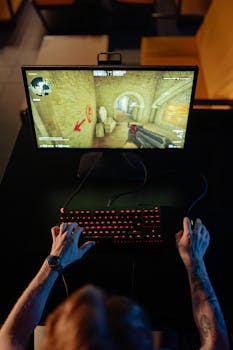
Aim Improvement Techniques for Shooter Players
Landing shots in shooters feels satisfying, especially when it happens consistently. Not every player knows where to start, yet aim improvement techniques aren’t beyond reach for anyone willing to learn.
Shooter games depend on reliability and quick reflexes. Aiming accurately does more than rack up stats; it changes the pace, outcome, and enjoyment of every match.
If you’re eager to elevate your performance using proven, practical aim improvement techniques, read on for actionable steps, clear comparisons, and realistic drills to incorporate today.
Building Consistency Through Daily Aim Routines
Setting structured routines leads to noticeable gains. Applying dedicated aim improvement techniques each day lets muscle memory develop and maintains hand-eye coordination under pressure.
Repeating specific drills (like tracking targets on training maps) pays off when real matches begin. Adopting a daily process means fewer wasted shots and improved accuracy.
Warming Up Effectively Before Every Session
A quick dynamic warmup keeps the hand steady. Wrist circles and brief stretches help prevent stiffness and prime your muscles for executing precise aim improvement techniques.
Try a routine: five minutes of flicking between in-game markers. Your hand responds quicker, and tracking feels intentional from the first minute of the match.
Many pros say, “I never skip my warm-up; everything else feels easier after.” Make it routine so your body knows it’s time to focus.
Tracking Versus Flicking: When to Train Each Skill
Tracking means steadily following a moving target, while flicking involves snapping the crosshair quickly to a target’s location using aim improvement techniques you can repeat.
Train tracking by locking onto a fast, zig-zagging bot for one minute, never letting the crosshair drift off. For flicks, swap rapidly between widely spaced targets.
Use a timer. Try: “Thirty seconds flicks, one minute tracking, repeat four times.” This routine builds both detailed control and reaction speed for every engagement.
| Routine | Drill Type | Benefit | Next Action |
|---|---|---|---|
| Warm-up | Wrist circles, dynamic stretching | Loosen joints, reduce injury risk | Start every play session this way |
| Tracking Drill | Follow moving target | Improves sustained aim | Train with moving bots, adjust sensitivity |
| Flick Drill | Snap to target, reset, repeat | Quickens reaction times | Practice for 10 minutes each day |
| Cooldown | Slow tracking, deep breathing | Relax hands, prevent fatigue | Always end sessions with cooldown |
| Review Session | Note patterns, identify errors | Targets weak points | Write down key findings after each drill |
Optimizing Mouse and Sensitivity Settings for Your Aim
Establishing the right mouse setup directly impacts aim improvement techniques and performance outcomes. Adjustments here align control with personal preference and game requirements.
Settings vary between shooters; desktop DPI, in-game sensitivity, and acceleration must fit together for consistent precision in all environments.
Fine-Tuning Mouse Grip for Control
A relaxed grip improves micro-adjustments, letting you move with subtlety. Clawed or fingertip grips favor fast, snappy motions; palm grips help stabilize for longer holds.
Experiment in aim trainers: “If my wrist aches, my grip’s too tight.” Adjust mid-session for comfort. Prioritize a neutral posture for repeatable aim improvement techniques.
- Find your natural grip by holding the mouse and noting finger placement; this minimizes tension, increases control, and supports long-term accuracy.
- Avoid purely copying others; test claw, fingertip, and palm on in-game ranges so your form matches your unique hand size and preferred movement style.
- Check for fatigue at 30-minute intervals. If you feel strain, change your mouse hold; a sustainable grip boosts consistency across long sessions.
- Rest your arm between rounds. Micro-breaks keep your muscles loose, limiting unwanted shaking that sabotages detailed aim improvement techniques.
- Practice returning to center after each shot: move back, re-center, then shoot; this becomes muscle memory, especially important during tense matches.
A stable grip keeps your focus on execution rather than discomfort, letting your performance shine through aim improvement techniques tailored just for you.
Dialing In Sensitivity For Precision
Set DPI and sensitivity to allow both sweeping movements and precise adjustments. Use aim trainers to measure how smoothly you can track targets on different speeds.
For example, if you overshoot small targets, lower your sensitivity by 10 percent. Retest until tracking feels both smooth and responsive as part of your aim improvement techniques.
- Begin at a mid-range DPI (800–1600) to align with most games, fine-tune the rest in software settings matching what feels smooth during tracking drills.
- Disable mouse acceleration in both game and operating system settings for consistent cursor movement every time you use aim improvement techniques.
- Select a mousepad large enough for full-arm sweeps; running out of space breaks rhythm, especially during panicked situations or fast pivots if sensitivity is low.
- Calibrate for your favorite shooter genre; tactical games favor low sensitivity for steadiness, while arena-style shooters benefit from mid-range for rapid adjustments.
- Adjust only one setting at a time between sessions; test, then log exact changes, ensuring each tweak brings visible improvement before layering new adjustments.
Once your mouse and sensitivity settings suit your style, integrating them with established aim improvement techniques leads to rapid, sustainable growth.
Reading Movement Cues to Anticipate Shots
Predicting where your target is headed narrows guesswork and maximizes successful shots. Using aim improvement techniques reliant on movement cues changes reactive play into proactive dominance.
Focusing on an enemy’s shoulders, hips, and weapon sway reveals intention. Each cue tells a story about their likely next move and timing for your shot.
Shoulder and Hip Movement Micro-Patterns
Experienced players scan for micro-movements: a left shift of the shoulders often precedes a peek, while hip alignment signals a quick strafe in progress.
Adopt the phrase, “Watch the hips, shoot ahead,” during duels. Applying aim improvement techniques means shooting where the player will be, not where they were.
Stay attuned to the enemy’s rhythm. If they duck and weave, aim for where their head will rise, anticipating with each glance so your first shot lands.
Weapon and Animation Tells
Weapon sway and reload animation alert attentive players to vulnerability windows. Sound cues and hand movement signal reloads or switches, opening a split-second advantage.
If an opponent begins reloading, time your peak: say aloud, “Now’s my chance.” Seize the moment with prepared aim improvement techniques so the shot lands cleanly.
Practice recognizing animation tells in replay mode; log examples by timestamp and response, improving with each review until these cues prompt instant action in matches.
Sustaining Focus During Intensifying Match Moments
Staying locked in when the pressure spikes makes aim improvement techniques truly effective. Focused players convert practice into performance, especially during fast-paced, stressful scenarios.
Distractions and nerves can pull your attention away. Channeling breath, using trigger words, and resetting after mistakes keeps execution sharp when it matters most.
Implementing Focus Rituals on Command
Set a simple focus ritual: between rounds, exhale slowly, roll shoulders once, and say “center up.” Your body links the action to sustained attention on aim improvement techniques.
Over time, repeating this ritual creates a positive feedback loop. You’ll feel a focus surge, letting past errors fade before the next round begins.
Add a single tactile element, like tapping the mouse before each round, to further anchor the reset. This concrete action strengthens performance under mounting tension.
Regaining Confidence After Critical Mistakes
When a missed shot derails you, recite, “That round’s gone, see the next.” Instantly return to standard aim improvement techniques, refusing to let errors spiral into hesitation.
Notice your posture; straighten your back and relax your jaw on purpose. Positive body language reinforces mental reset, restoring confidence as the match resumes.
Record each recovery step in a round log. Reviewing these later builds self-trust, knowing you’ve trained the ability to bounce back stronger every time.
Integrating Scenario-Based Aim Drills Into Routine
Scenario-based drills align aim improvement techniques with realistic encounters. These exercises stress test your aim under conditions that mirror high stakes, giving your skills practical context.
Drills like peeking around corners or countering rushes combine flicking, tracking, and environmental awareness for all-around readiness.
Corner Peeking and Holding Angles
Find a training map with multiple cover objects. Practice the sequence: approach, stop, snap to an angle, hold, then gradually expand view. Repeat using deliberate aim improvement techniques.
Apply a mental script: “Approach. Stop. Check left. Check right. React.” Rehearsing this reduces hesitation and improves speed-to-shot transitions every match.
Envision yourself as a goalie anticipating a kick—you wouldn’t guess, but you’d watch the foot placement before diving. Apply that to every peek and angle hold.
Simulating Multi-Target Engagements
Set up targets in a row. Start by snapping to the closest, then move to the second, and reset for the third. Build speed while never sacrificing accuracy.
Say internally, “One, two, three—reset.” Each rep strengthens aim improvement techniques by ingraining exact patterns you’ll use facing multiple threats in matches.
Track errors. If you miss, slow the tempo and rebuild rhythm. Work up to game-speed drills once initial smoothness and control are established.
Adapting Aim Techniques to Different Shooter Genres
Matching specific aim improvement techniques to game genres maximizes value. Tactics for a tactical shooter differ from those in a fast arena game—context tailors success.
Each genre rewards particular strengths, making it vital to customize aim improvement techniques to context for consistent progression.
Tactical Shooters: Prioritizing Patience and Angle Discipline
In tactical shooters, slow deliberate aim produces results. Hold longer angles, pre-aim at head height, and keep crosshairs static whenever movement stops.
Find a comfortable low sensitivity, allowing small wrist movements instead of jerking forearm motions. This steadiness is central for tactical game aim improvement techniques.
After each round, evaluate angle choices. If your pre-aimed spot rarely landed shots, tweak height or distance and log specific engagement outcomes for continued growth.
Arena Shooters: Emphasizing Speed and Adaptive Flicking
Quick movement dominates arena shooters. Prioritize high-sensitivity settings, fast flicking, and broad sweeps paired with small finger adjustments to land shots on unpredictable targets.
Train aim improvement techniques by practicing on busy sandbox maps. React to chaotic patterns and incorporate jump-tracking to keep pace with the dynamic pace of play.
End sessions with a free-for-all deathmatch, using rapid, aggressive aims. This creates a bridge between raw ability and game-specific execution in pressure situations.
Bringing New Aim Techniques Into Competitive Play
Translating learned aim improvement techniques into ranked matches demands practice and self-awareness. Challenges arise, but steady adaptation cements transferable skills in any competition tier.
Progress logs and recorded demos guide continued refinement, turning isolated drills into match-ready reflexes for aim improvement techniques.
Using Match Reviews for Self-Feedback
After every competitive round, review replays critically. Focus: “Where did my crosshair pause? Was I late to track or snap?” Write down what needs work.
Each observation ties back to aim improvement techniques. Setting one actionable focus for the next session keeps improvement specific and manageable, instead of overwhelming.
Save two clips per week: one success, one mistake. Compare. Ask, “What changed my outcome in each?” Copy the better action next match.
Adjusting Techniques Mid-Match For Results
Stay flexible. In a losing streak, revisit your warm-up or switch mouse grip. “Grip too tight,” might prompt a pause and reset using familiar aim improvement techniques.
If your sensitivity feels off, adjust incrementally in halftime breaks rather than between rounds. Always revert changes if performance decreases after tweaking settings mid-match.
Through consistent awareness, your skills develop even under stress. Each small correction solidifies long-term mastery of practical, lasting aim improvement techniques.
Practical Steps for Long-Term Aim Growth
Applying these aim improvement techniques consistently brings clear, long-term benefits to every shooter player. Each drill yields measurable results when executed faithfully over weeks.
Remember to review routines, update settings when needed, and study recorded matches to maintain progression. Adapting strategies as your preferred shooter evolves keeps every session fresh and focused.
From warmups and drills to scenario-based routines, daily effort creates noticeable momentum. Make use of these realistic aim improvement techniques, and watch your accuracy and confidence grow each match.