
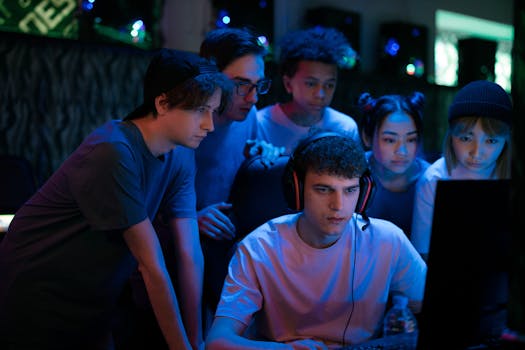
Team Coordination Mechanics in Multiplayer Games: Building Synergy for Victory
Every multiplayer match can become a chaotic scramble—unless everyone knows their role and how to sync actions. That’s where team coordination mechanics shine brightest in collaborative play.
Games designed with effective team coordination mechanics create more engaging, fair, and memorable experiences. Whether competing with friends or strangers, understanding what helps teams gel is essential for positive results.
This article explores practical, observable team coordination mechanics in multiplayer games, highlighting actionable strategies and real-life analogies any player can implement for immediate improvement.
Clear Communication Protocols Improve Team Play From the Start
Teams that use structured communication protocols outperform rivals. Set language shortcuts everyone understands, like “push,” “fall back,” or “heal me now.”
Fast, clear language removes confusion in critical moments. When everyone shares shorthand for key moves, responses become instinctive, not delayed.
Standardizing Essential Calls for Any Situation
In tense matches, players who say, “Rotate site!” or “Double up on left!” create obvious decisions instantly. Others react right away, avoiding wasted actions or hesitation.
Avoid vague phrases. Instead, designate a check-in word, such as, “All clear?” If ignored, prompt a teammate: “Status for support?” This method stops silent confusion from derailing momentum.
Apply this to real life by setting check-in words in group projects: agree that “Ready!” means everyone prepared, cutting delays or repeated requests. Consistency creates comfort and faster action.
Assigning Roles Before the Action Begins
Efficiency increases when everyone knows who is leading, defending, or scouting. Announce, “I’m watching mid,” or “Let me anchor defense,” before the round starts.
Role assignment isn’t just about skills; it helps avoid two people doubling up and leaving gaps. Use a simple exchange: “Who’s on point?” “I’ve got it.”
Adopt this outside games, like delegating project tasks: “Sarah handles outreach; I’ll prepare slides.” Clarity on roles amplifies team confidence and direction.
| Category | Example Call | When to Use | Takeaway Action |
|---|---|---|---|
| Early Game | “Scout ahead!” | Before first engagement | Appoint a scout before moving in. |
| Mid Game | “Rotate left!” | As map positions shift | Agree on rotation terms up front. |
| Late Game | “Stack defenses!” | When holding territory | Assign defensive leader by name. |
| Under Pressure | “Peel for me!” | If main attacker is pressured | Teach “peel” to every team member. |
| Critical Recovery | “Reset formation!” | After a failed push | Recover by agreeing on a group spot. |
Establishing Roles and Responsibilities for Consistent Results
Assign roles early and update them as needed. Teams with clear tasks play with confidence, reducing duplicate effort and minimizing unexpected gaps in tactics.
If someone says, “I’ll flank, you cover,” others know what’s expected. Rigid roles help structure response routines, but allow minor adjustments for flexibility during each match.
Building Adaptive Role Structures for Dynamic Scenarios
Adaptability is critical when team coordination mechanics face unpredictable opponents. After a surprise defeat, try, “Let’s swap, I’ll support.” Mixing roles can disrupt enemy strategies and refresh team energy.
This mirrors workplace projects: As deadlines shift, agreeing to swap lead tasks ensures goals aren’t missed. Don’t hesitate to revisit or reassign roles after new information emerges.
- Announce your primary role at match start—others may volunteer to fill in gaps, preventing overlap and wasted coverage from the outset.
- If another player swaps jobs, acknowledge immediately—“Noted, you’re main tank now”—to prevent loss of structure mid-game when team coordination mechanics must adjust swiftly.
- Rotate team leads during losing streaks—exchanging perspectives can spark new strategies, energize play, and prevent the group from getting stuck in a single failed routine.
- Check roles after each round briefly—“Everyone still set?”—which provides a pulse-check and avoids silent drift from assigned tasks as the match evolves.
- Try deliberate practice rounds with randomized roles to increase flexibility, preparing for unpredictable changes in real matches and reinforcing trust in foundational team coordination mechanics.
Structured roles and flexibility are mutually reinforcing—maintain a baseline, but build in time to reassess or rotate regularly for continued growth and resilience.
Maintaining Task Visibility and Accountability
List responsibilities at match start—“Alex: mid, Jamie: left, Sarah: right”—then repeat key tasks during breaks. Keep roles visible to minimize confusion when tension rises and busy action clouds memory.
Incorporate reminders into routines—have one player recap team roles at halftime, mirroring successful workplace standups where team coordination mechanics improve with quick check-ins.
- Review task assignments out loud to others—verbalizing plans reinforces ownership and gives teammates a script to reference under pressure, especially if someone forgets their job.
- Ask for role confirmations after every round—“Still healer?”—so roles remain clear, even when matches feel hectic and the plan keeps changing based on enemy actions.
- Keep backup plans for sudden absences—rotate a “vice” player who steps in if someone disconnects, ensuring continuity in key functions through thoughtful team coordination mechanics.
- Record victories and failures tied to roles to spot patterns—over time, teams refine assignments based on reliable, observed results, making future coordination faster and more accurate.
- If disputes arise, default to “first called” or “highest experience”—settle quickly and publicly, so indecision doesn’t derail tempo or sow confusion among the team’s core mechanics.
Consistent role tracking leads to faster resolutions, fewer mistakes, and increased trust in your team coordination mechanics throughout each match and long-term session.
Timing Actions for Synchronized Team Moves
Synchronized moves create opportunities that scattered gameplay never could. Using countdowns or timed markers helps align team actions—such as attacking together—so every member hits at the exact moment.
Incorporate timing cues, like “On my mark…three, two, one, now!” This clarity avoids isolated mistakes where one player jumps early, and another hesitates, breaking up unified team coordination mechanics.
Sequencing Attacks With Verbal Cues
A well-timed group push, signaled by a countdown, tilts victory odds dramatically. For instance, calling out, “Go after reload!” ensures everyone acts while opponents are least ready.
A delay in timing ruins a perfect setup, so teams repeat calls with urgency. “Stack up, push on go.” Success depends on practicing cue response until it feels automatic.
This practice maps to group sports—imagine soccer players charging the net when the midfielder shouts a shared signal. Apply that synchrony to your team coordination mechanics for instant improvement.
Spacing and Staggering Team Movement
Rushing in single file risks easy defeat. Teams using, “Move in pairs, stagger entry!” split into duos, spacing movement to avoid crowd control or area attacks that target clustered groups.
The phrase, “Hold at choke, pair up!” lets teammates reset, form into sub-groups, then advance with more stability. Each pair covers the other, minimizing risk of group wipeouts and maximizing team coordination mechanics efficiency.
Try pairing up in real situations—at a crowded event, entering separately keeps groups connected but less conspicuous, echoing the in-game value of spacing for safety and adaptability.
Pooling Resources for Shared Advantage
Teams win more by sharing tools and abilities—like distributing healing items, swapping information, or saving ultimate abilities for a group attack—rather than hoarding for solo moments.
Whenever someone calls, “Save ults for next fight!” it signals maturity: team coordination mechanics prioritize joint effort over individual stats, securing wins others miss by acting alone.
| Resource Type | Solo Use Result | Team Use Result | Best Practice |
|---|---|---|---|
| Healing Items | Minor survival | Team wipe-avoidance | Pool kits in spawn, distribute lowest-health first |
| Ultimate Abilities | Single-target impact | Squad wipe, objective capture | Announce 90 percent charge, time activation together |
| Information on Enemy Moves | Personal awareness | Group-wide anticipation | Type or say enemy flanks right away; avoid silent hoarding |
| Upgraded Gear | Individual boost | Strategic team coverage | Rotate strongest gear to frontline or anchor roles first |
| Map Control | Short territory gains | Lasting area dominance | Anchor points for respawning teammates; rotate defenders often |
Adapting to Shifts in Team Coordination Mechanics During Live Play
In-game situations change rapidly. Skilled teams pivot without losing structure, updating calls and shifting roles with poise when outcomes don’t match the early plan.
After a failed push, the call, “Group up, reset—it’s plan B,” signals to shake off errors, keeping coordination fluid and morale high even mid-match.
Reading Opponents and Adjusting Team Strategy
Spotting trends, like enemy snipers changing positions, lead to the call, “All right, flank right, avoid mid!” which redirects the whole squad on the fly for better outcomes.
Deliberate review after setbacks—“What caused the wipe?”—builds learning into routines. Team coordination mechanics improve every round by updating, not repeating failed approaches.
Create a practice of alternating post-match reviews: celebrate success and dissect mistakes with non-blaming language, like “Next time, double up right sooner.” This steady review loop cements adaptive thinking into every match.
- Call out changes the instant you sense a shift—waiting lets teams fall behind, so act as soon as you spot an enemy pivot or terrain change impacting your coordination mechanics.
- Use “Plan A/B/C” shorthand—establish three pre-made fallback plans, so everyone pivots instantly instead of arguing tactics mid-crisis and losing momentum.
- Favor specific, actionable feedback—say, “Switch to zone defense; their flanker is left,” over general instructions, removing ambiguity in the heat of battle for stronger team coordination mechanics.
- If roles swap mid-round, announce loudly and confirm—teams with vocal swaps adapt faster, rescuing failing scenarios through real-time dialogue, rather than relying on old assignments unsuited to current events.
- Take ten seconds after each loss to reestablish structure—this visible step anchors new plans and ensures everyone is committed to the latest plan without silent doubts or missed signals.
Reviewing and Refining Team Coordination After Each Match
Teams that regularly review matches improve faster than those who don’t. Schedule five minutes post-match for everyone to share what worked and what slowed down team coordination mechanics.
Each player shares a precise example, like, “Calling rotations early saved us last round,” or, “We lost objective when two people left role without saying.” This avoids abstract, unhelpful feedback.
Building a Habit of Constructive Critique
Focus on observable behavior: “We won when we pushed together at the countdown,” not vague praise. Honest, direct reflection builds a culture where criticism fuels learning and isn’t taken personally.
In sports, reviewing game film creates breakthrough understanding. Use game replays to spot missed cues, over-aggressive plays, or roles that broke down. Share video clips or timestamps for context.
End meetings on a positive: “We improved coordination on ults. Let’s keep that up.” Recognize gains to motivate steady investment, integrating sharp critiques with celebration for balanced momentum.
Integrating Review Cycles Into Future Team Coordination Mechanics
Start each session by recapping one lesson from last review. Example: “Let’s stick to pairs on defense today.” Reinforcing past learning cements progress and speeds up future improvements.
Gradually update your communication playbook—add phrases, signals, or role handoffs that helped, scrub what confused. Every new round should build on the last.
Assign a rotating review lead. This keeps feedback dynamic and prevents groupthink, as everyone brings unique perspectives and personal experience with evolving team coordination mechanics.
Shared Success: What Effective Team Coordination Mechanics Deliver
When teams practice strong team coordination mechanics, outcomes shift from random wins to earned victories. Coordination means seamless role swaps, synchronized action, clear communication, and continuous review cycles.
Each win is less about lucky plays and more about the system: a repeatable rhythm where every member trusts the process and each signal carries specific meaning everyone follows.
Prioritizing team coordination mechanics empowers groups to face higher-skilled opponents or tougher challenges, knowing adaptation, clear calls, and mutual support give an edge beyond individual talent.